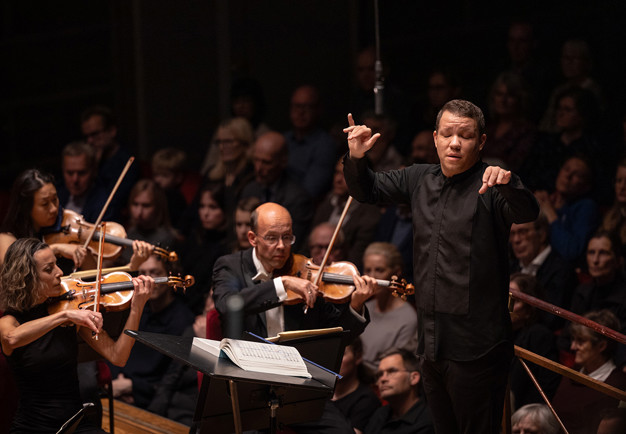
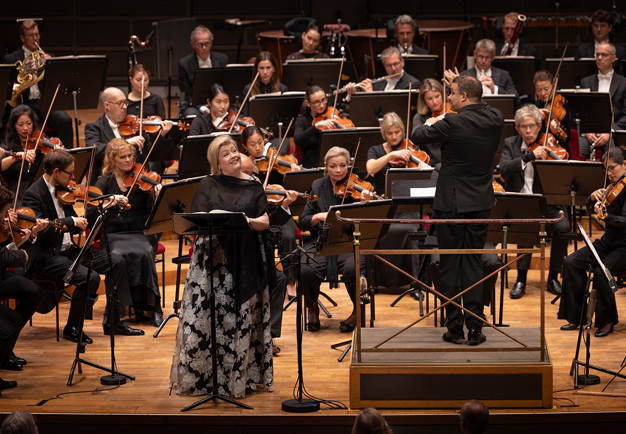
Genre: Royal Stockholm Philharmonic Orchestra, Vocal music

Gustav Mahler Des Knaben Wunderhorn

Earthy humour, love, sorrow and visions in Mahler’s songs, alongside Blumine, a deeply sentimental symphonic movement.

Gustav Mahler was deeply fascinated by Des Knaben Wunderhorn (The Youth’s Magic Horn), a collection of German folk poetry published in the early nineteenth century. Here he discovered stories and moods that would accompany him throughout much of his creative life. Several of the songs also found their way into his symphonies.

The songs are preceded by Blumine, originally a deeply sentimental movement from Mahler’s First Symphony. Critics considered it too banal, and Mahler soon removed the movement from the symphony. The music was rediscovered by a Mahler scholar in the 1960s.

This selection of eight songs (including the encore) from Des Knaben Wunderhorn encompasses a wide range of human experiences. Rheinlegendchen (Little Rhine Legend) is a playful love story, while Verlor’ne Müh’ (Labour Lost) and Trost im Unglück (Consolation in Misfortune) are characterised by earthy humour and lovers’ banter. In Wo die schönen Trompeten blasen (Where the Fair Trumpets Sound), the mood turns ominous, while Das irdische Leben (Earthly Life) tells a dark tale of hunger and death.

The two songs preceding the encore look beyond earthly existence. Das himmlische Leben (Heavenly Life) depicts paradise through the eyes of a child, combining innocence with wry humour. Urlicht (Primal Light), by contrast, is a heartfelt and solemn prayer for salvation. The encore is Wer hat dies Liedlein erdacht? (Who Thought Up This Little Song?), an exuberant and humorous song with dance-like rhythms and virtuosic vocal embellishments.

  • The music

  • Gustav Mahler Blumine – Symphonic Movement
  • Gustav Mahler Rheinlegendchen
  • Gustav Mahler Verlor’ne Müh’
  • Gustav Mahler Trost im Unglück
  • Gustav Mahler Wo die schönen Trompeten blasen
  • Gustav Mahler Das irdische Leben
  • Gustav Mahler Das himmlische Leben
  • Gustav Mahler Urlicht
  • Encore:
  • Gustav Mahler Wer hat dies Liedlein erdacht?
  • Participants

  • Royal Stockholm Philharmonic Orchestra
  • Ryan Bancroft conductor
  • Karen Cargill mezzo-soprano

Play premiere

Watch completely free and without login.

Tuesday 17 November 2026 15.00


About the video

  • Filmed 15 October 2026.
  • The video is approximately 48 minutes.

Watch in our app

The Konserthuset Play app makes it easier to experience music on your phone or tablet – or on a big screen! Read more

FAQ about Konserthuset Play

Our tips for how to best take advantage of our selection and how you watch our livestreams. To FAQ

Genre: Royal Stockholm Philharmonic Orchestra, Vocal music

Gustav Mahler Des Knaben Wunderhorn

Earthy humour, love, sorrow and visions in Mahler’s songs, alongside Blumine, a deeply sentimental symphonic movement.

Play premiere

Watch completely free and without login.

Tuesday 17 November 2026 15.00


About the video

  • Filmed 15 October 2026.
  • The video is approximately 48 minutes.

Gustav Mahler was deeply fascinated by Des Knaben Wunderhorn (The Youth’s Magic Horn), a collection of German folk poetry published in the early nineteenth century. Here he discovered stories and moods that would accompany him throughout much of his creative life. Several of the songs also found their way into his symphonies.

The songs are preceded by Blumine, originally a deeply sentimental movement from Mahler’s First Symphony. Critics considered it too banal, and Mahler soon removed the movement from the symphony. The music was rediscovered by a Mahler scholar in the 1960s.

This selection of eight songs (including the encore) from Des Knaben Wunderhorn encompasses a wide range of human experiences. Rheinlegendchen (Little Rhine Legend) is a playful love story, while Verlor’ne Müh’ (Labour Lost) and Trost im Unglück (Consolation in Misfortune) are characterised by earthy humour and lovers’ banter. In Wo die schönen Trompeten blasen (Where the Fair Trumpets Sound), the mood turns ominous, while Das irdische Leben (Earthly Life) tells a dark tale of hunger and death.

The two songs preceding the encore look beyond earthly existence. Das himmlische Leben (Heavenly Life) depicts paradise through the eyes of a child, combining innocence with wry humour. Urlicht (Primal Light), by contrast, is a heartfelt and solemn prayer for salvation. The encore is Wer hat dies Liedlein erdacht? (Who Thought Up This Little Song?), an exuberant and humorous song with dance-like rhythms and virtuosic vocal embellishments.

  • The music

  • Gustav Mahler Blumine – Symphonic Movement
  • Gustav Mahler Rheinlegendchen
  • Gustav Mahler Verlor’ne Müh’
  • Gustav Mahler Trost im Unglück
  • Gustav Mahler Wo die schönen Trompeten blasen
  • Gustav Mahler Das irdische Leben
  • Gustav Mahler Das himmlische Leben
  • Gustav Mahler Urlicht
  • Encore:
  • Gustav Mahler Wer hat dies Liedlein erdacht?
  • Participants

  • Royal Stockholm Philharmonic Orchestra
  • Ryan Bancroft conductor
  • Karen Cargill mezzo-soprano

Watch in our app

The Konserthuset Play app makes it easier to experience music on your phone or tablet – or on a big screen! Read more

FAQ about Konserthuset Play

Our tips for how to best take advantage of our selection and how you watch our livestreams. To FAQ