Genre: Royal Stockholm Philharmonic Orchestra

Johannes Brahms Symphony No 4

Rigorous form and powerfuls emotion in Brahms’s final symphony.

Johannes Brahms wrestled for many years with the idea of writing symphonies. Beethoven was both his great model and an almost paralysing presence: Brahms spoke of the feeling of having “a giant like Beethoven marching behind him”. By the time his Fourth and final Symphony was completed in 1885, he had long since found his own path within the tradition.

The first movement already reveals one of Brahms’s hallmarks: the way a simple motif can be transformed and developed into a rich musical argument. The opening, sighing movement between falling and rising notes leaves its imprint on the entire movement. After the darker, more contemplative Andante moderato comes the symphony’s most extrovert movement, energetic and powerful.

The finale is the symphony’s formal culmination. Here Brahms reaches all the way back to the Baroque, constructing a passacaglia in which a recurring theme forms the basis for some thirty variations. The theme has its origins in Johann Sebastian Bach, but in Brahms’s hands it grows into a dramatic finale of constantly shifting expression. The symphony does not end in triumph, but remains in the darkness of E minor through to its powerful final chords.

  • The music

  • Johannes Brahms Symphony No. 4
  • Participants

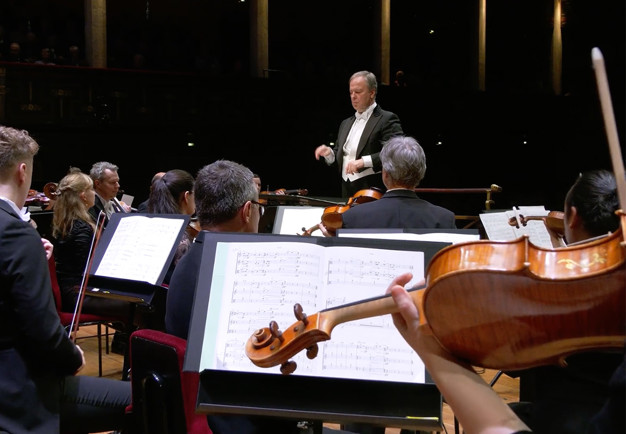
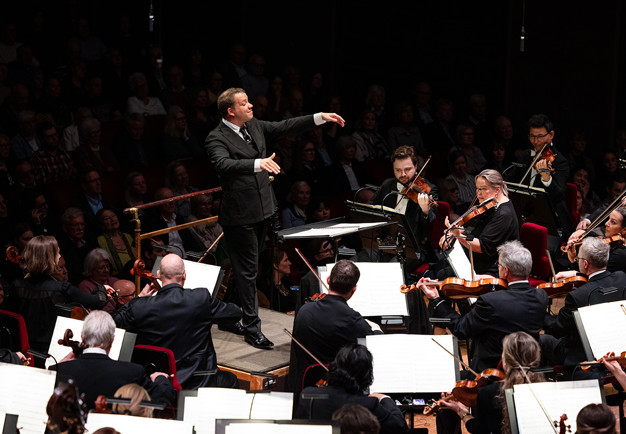
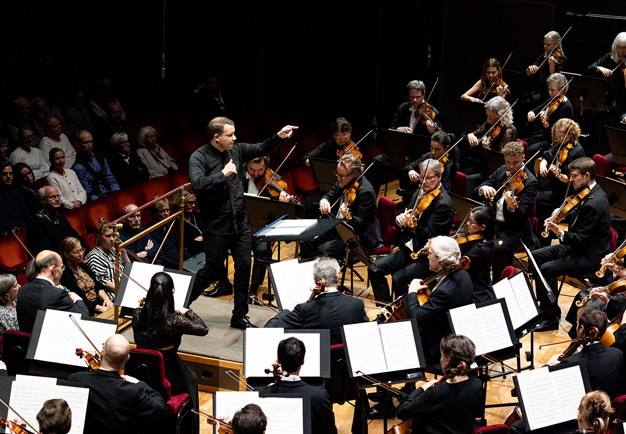
  • Royal Stockholm Philharmonic Orchestra
  • Herbert Blomstedt conductor

About the video

  • Filmed 22 September 2022.
  • The video is approximately 45 minutes.

Watch in our app

The Konserthuset Play app makes it easier to experience music on your phone or tablet – or on a big screen! Read more

FAQ about Konserthuset Play

Our tips for how to best take advantage of our selection and how you watch our livestreams. To FAQ

Genre: Royal Stockholm Philharmonic Orchestra

Johannes Brahms Symphony No 4

Rigorous form and powerfuls emotion in Brahms’s final symphony.

About the video

  • Filmed 22 September 2022.
  • The video is approximately 45 minutes.

Johannes Brahms wrestled for many years with the idea of writing symphonies. Beethoven was both his great model and an almost paralysing presence: Brahms spoke of the feeling of having “a giant like Beethoven marching behind him”. By the time his Fourth and final Symphony was completed in 1885, he had long since found his own path within the tradition.

The first movement already reveals one of Brahms’s hallmarks: the way a simple motif can be transformed and developed into a rich musical argument. The opening, sighing movement between falling and rising notes leaves its imprint on the entire movement. After the darker, more contemplative Andante moderato comes the symphony’s most extrovert movement, energetic and powerful.

The finale is the symphony’s formal culmination. Here Brahms reaches all the way back to the Baroque, constructing a passacaglia in which a recurring theme forms the basis for some thirty variations. The theme has its origins in Johann Sebastian Bach, but in Brahms’s hands it grows into a dramatic finale of constantly shifting expression. The symphony does not end in triumph, but remains in the darkness of E minor through to its powerful final chords.

  • The music

  • Johannes Brahms Symphony No. 4
  • Participants

  • Royal Stockholm Philharmonic Orchestra
  • Herbert Blomstedt conductor

Watch in our app

The Konserthuset Play app makes it easier to experience music on your phone or tablet – or on a big screen! Read more

FAQ about Konserthuset Play

Our tips for how to best take advantage of our selection and how you watch our livestreams. To FAQ